
In a late-night segment that quickly gained traction online, Stephen Colbert responded to remarks attributed to Donald Trump regarding elite education, turning what began as a routine monologue into a widely discussed media moment.
The exchange traces back to public comments questioning the value and credibility of graduates from institutions such as Harvard University. Those remarks, which circulated broadly across news and social platforms, sparked debate about merit, access, and how intelligence is measured in modern society.
Colbert’s response, as reconstructed from transcripts, did not rely solely on humor. Instead, he introduced a visual element—a document presented on screen as a historical test scorecard—placing it alongside the broader discussion about academic credibility.
Observers note that the impact of the segment came from its structure. Rather than escalating rhetorically, Colbert allowed the juxtaposition to guide the moment, blending satire with a more pointed commentary on assumptions about intelligence and achievement.
Audience reaction, as described, followed a familiar but notable pattern. Laughter initially accompanied the setup, but gradually shifted into a more attentive silence as the segment progressed. Media analysts often point to these pauses as indicators that a segment has moved beyond entertainment into reflection.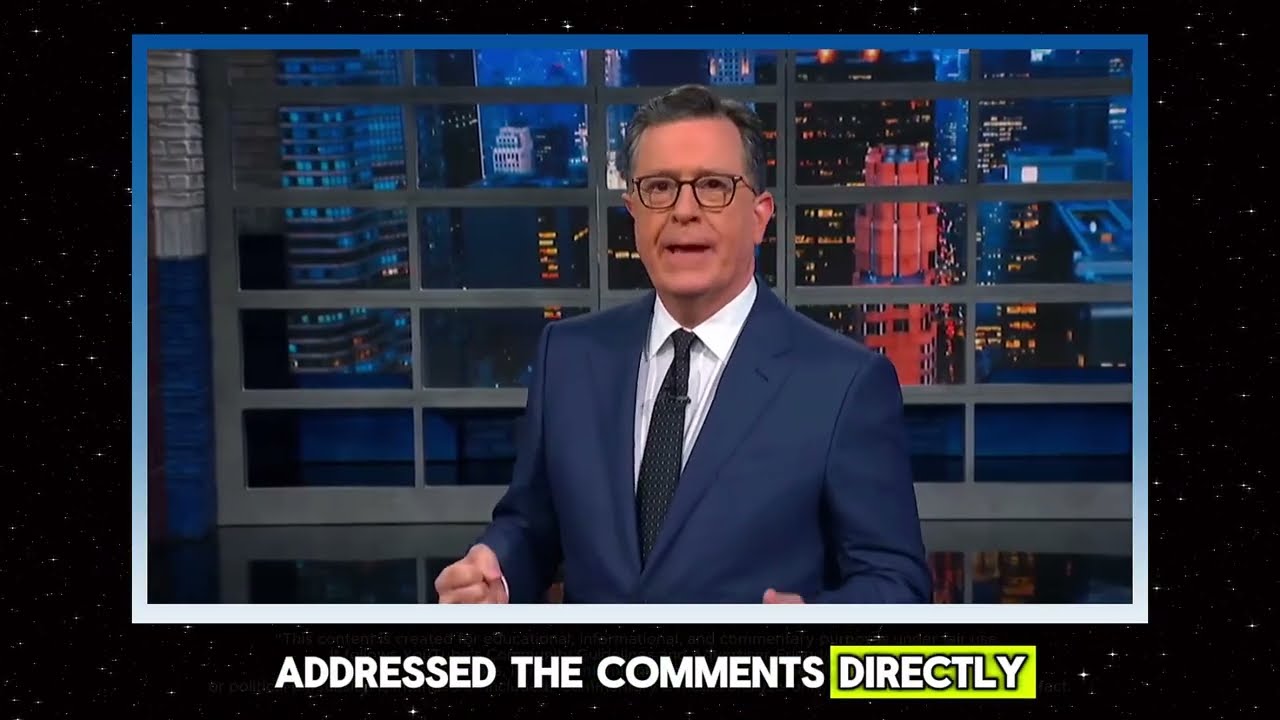
The clip spread rapidly after airing, generating millions of views and sparking discussion across platforms. Reactions were divided. Some viewers praised the segment as a sharp and effective rebuttal, while others questioned the blending of entertainment with political commentary.
Scholars of media and communication highlight that this moment reflects a broader trend. Late-night hosts have increasingly become participants in public discourse, using their platforms to engage with political narratives in ways that extend beyond traditional comedy.
At the same time, experts emphasize the importance of context. Materials presented in such segments—particularly historical documents or scorecards—may be used as narrative devices rather than independently verified records, and should be interpreted accordingly.
The discussion also touches on larger cultural questions. Debates about education, institutional prestige, and intellectual credibility have long been part of public life, and moments like this often serve as flashpoints for those ongoing conversations.
Television networks and hosts continue to navigate the balance between humor and commentary. In Colbert’s case, his approach has consistently leaned toward blending satire with topical engagement, positioning his show within a specific niche of late-night programming.
Ultimately, the segment illustrates how timing, framing, and contrast can elevate a late-night monologue into a broader cultural moment. By combining humor with a more structured presentation, it created a sequence that continues to be replayed and discussed as audiences consider its implications.
