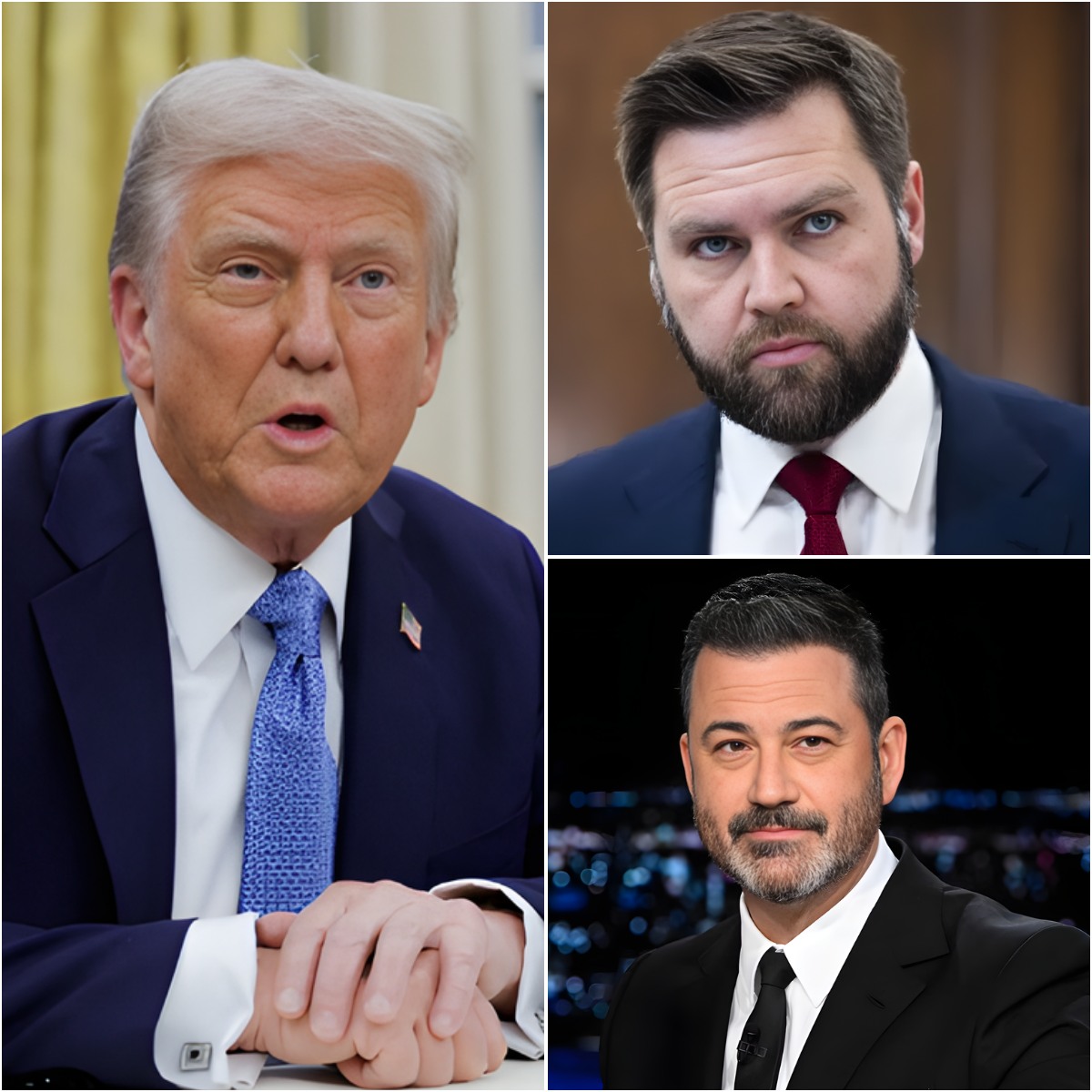
The latest media storm involving Donald Trump, Jimmy Kimmel, and JD Vance highlights the growing intersection between entertainment and politics. What began as late-night satire has evolved into a broader public conversation about power, messaging, and perception in modern American politics.
At the center of the moment is Jimmy Kimmel’s ongoing commentary, where humor is used to scrutinize political figures. His segments targeting JD Vance have gained traction not only for their comedic tone but also for how they reference past statements, interviews, and policy positions. The approach reflects a long tradition of political satire serving as both entertainment and critique.
Donald Trump’s reported reactions, as described in the narrative, add another layer of intrigue. The idea that internal frustration may be surfacing—particularly in response to how media narratives are landing—suggests that late-night commentary is no longer easily dismissed as background noise. Instead, it appears to be influencing broader political discourse.
JD Vance, meanwhile, is portrayed as navigating a complex position. Once known for specific policy stances, particularly on foreign intervention, his evolving role has drawn attention. Commentators have pointed to contrasts between earlier public statements and more recent developments, turning him into a focal point for both criticism and debate.
A key theme running through the discussion is the power of media framing. Kimmel’s segments often rely on juxtaposition—placing past quotes alongside current actions—to create a narrative arc. This method resonates with audiences because it simplifies complex political shifts into digestible moments.
The conversation also touches on the role of free speech and media influence. References to figures like Brendan Carr highlight ongoing debates about whether political pressure affects broadcast content. While perspectives differ, the issue underscores how sensitive the relationship between government and media remains.
Another dimension involves public perception and political branding. Trump’s communication style has long been central to his appeal, but moments like these show how quickly narratives can shift when filtered through satire and viral media clips. The amplification effect of television and online platforms plays a major role.
The portrayal of Melania Trump also appears in the broader narrative, though such discussions often blend verified facts with commentary and interpretation. In media environments like this, distinguishing between reporting and opinion becomes increasingly important for audiences seeking clarity.
:max_bytes(150000):strip_icc():focal(750x247:752x249)/jimmy-kimmel-live-091825-7a3491d46712499eaa40b1323dc5345a.jpg)
Late-night television, once considered primarily entertainment, now functions as a significant platform for political messaging. Hosts like Jimmy Kimmel are not just comedians but influential voices shaping how millions interpret current events. This shift reflects broader changes in how people consume news.
At the same time, critics argue that satire can oversimplify or polarize issues. Supporters, however, see it as a necessary counterbalance—using humor to question authority and highlight inconsistencies. This tension is part of what makes moments like this so widely discussed.
The digital ecosystem further amplifies these exchanges. Clips circulate rapidly, reactions build in real time, and narratives evolve within hours. What happens on a late-night stage can quickly become a national talking point, influencing both public opinion and political strategy.
Ultimately, the ongoing dynamic between Donald Trump, JD Vance, and Jimmy Kimmel reflects a larger trend: politics is increasingly performed, interpreted, and contested in media spaces. As the story continues to develop, one question remains—how much influence does satire truly have on the real-world political landscape?
