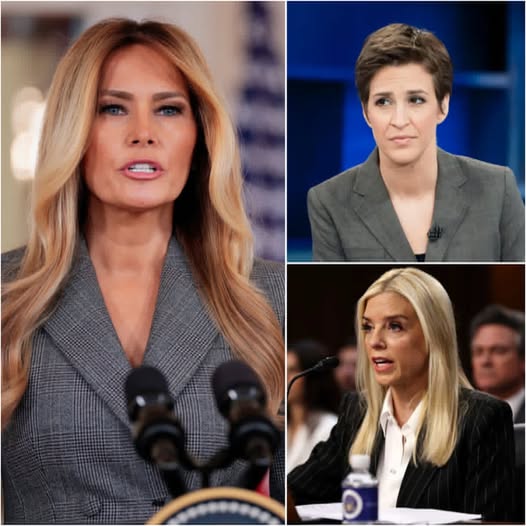
The halls of the House Oversight Committee are usually a theater of political combat, but a recent session was defined not by who was there, but by the glaring presence of an empty chair. Pam Bondi, the former Florida Attorney General and a stalwart ally of Donald Trump, was lawfully subpoenaed to appear and provide testimony regarding one of the most sensitive subjects in modern American history: the handling of the Jeffrey Epstein files. Instead of answers, however, the American public was met with a wall of silence. Bondi’s refusal to appear has sent shockwaves through Washington, signaling what critics describe as a “flashing red warning sign” that the MAGA Republican machine is treating congressional oversight not as a legal obligation, but as a threat to be managed through defiance and delay .
This situation is not merely a procedural dispute or a scheduling mishap. It is a fundamental challenge to the rule of law. When a citizen—especially a former high-ranking law enforcement official—is served with a legally binding order to testify, the expectation is compliance. Yet, the argument emanating from the Trump camp suggests that because Bondi has changed job titles and is no longer an active Attorney General, the subpoena somehow loses its weight . Legal experts and Democratic committee members have been quick to point out the absurdity of this claim. A subpoena does not dissolve because of a career change; its power rests in the authority of Congress to investigate matters of public interest. Ranking member Robert Garcia was blunt in his assessment, warning that Bondi is actively evading the law and that contempt proceedings are the inevitable next step for such blatant non-compliance .

At the heart of this confrontation lies the Jeffrey Epstein investigation. The public has long demanded transparency regarding how the billionaire pedophile managed to navigate the legal system for so long and who may have been involved in his orbit. The House Oversight Committee’s investigation into how the Trump administration handled these files is a critical part of that puzzle. Bondi’s refusal to speak is particularly galling because she was previously willing to appear in an “informal” setting—one where she was not under oath and could stick to prepared talking points without the risk of legal jeopardy . By dodging the formal deposition, she is effectively signaling that she is unwilling to let her words carry the weight of potential perjury, a move that many interpret as a sign that the truth would be damaging.
The Republican response within the committee has been equally telling. Rather than acting as overseers focused on uncovering the truth, many GOP members appeared to function more as bodyguards for the former president’s inner circle. Their strategy has leaned heavily on “whataboutism,” a tactic designed to create fog and confusion by dragging up past scandals involving the Clintons or other Democrats from decades ago . This diversionary tactic serves a specific purpose: to ensure the current scandal is never addressed head-on. As the narrative goes, if you can’t defend the conduct, you simply change the subject. However, as proponents of the investigation point out, Hillary and Bill Clinton both sat for hours of testimony when summoned. The contrast with Bondi’s total absence is a stark reminder of the “selective law enforcement” philosophy that has come to define the modern MAGA movement.
Adding to the complexity of the situation is the role of Todd Blanche, the acting Attorney General. Blanche recently appeared on national television to insist that the administration has been perfectly transparent, claiming that everything responsive to the Epstein files has already been released . He assured the public that if anything else were found, it would be shared immediately. Yet, these claims of transparency are difficult to reconcile with the reality of millions of documents being withheld. According to committee findings, while some records have been reviewed, tens of millions of internal communications remain hidden behind various legal shields, including “attorney-client privilege” and “deliberative process” arguments . If there is truly nothing left to hide, the question remains: why is the administration fighting so hard to keep these records in the dark?
Perhaps the most surprising twist in this saga is the public stance of Melania Trump. The former First Lady recently released a statement calling for public hearings centered on justice for Epstein’s victims. Her call for truth and transparency stands in direct opposition to the behavior of her husband’s closest political allies. If the administration’s goal were truly to provide closure for the victims, as Melania suggests, then the stonewalling of Pam Bondi makes little sense . This disconnect suggests that the rhetoric of the administration is merely a cover for a more defensive and protective reality.
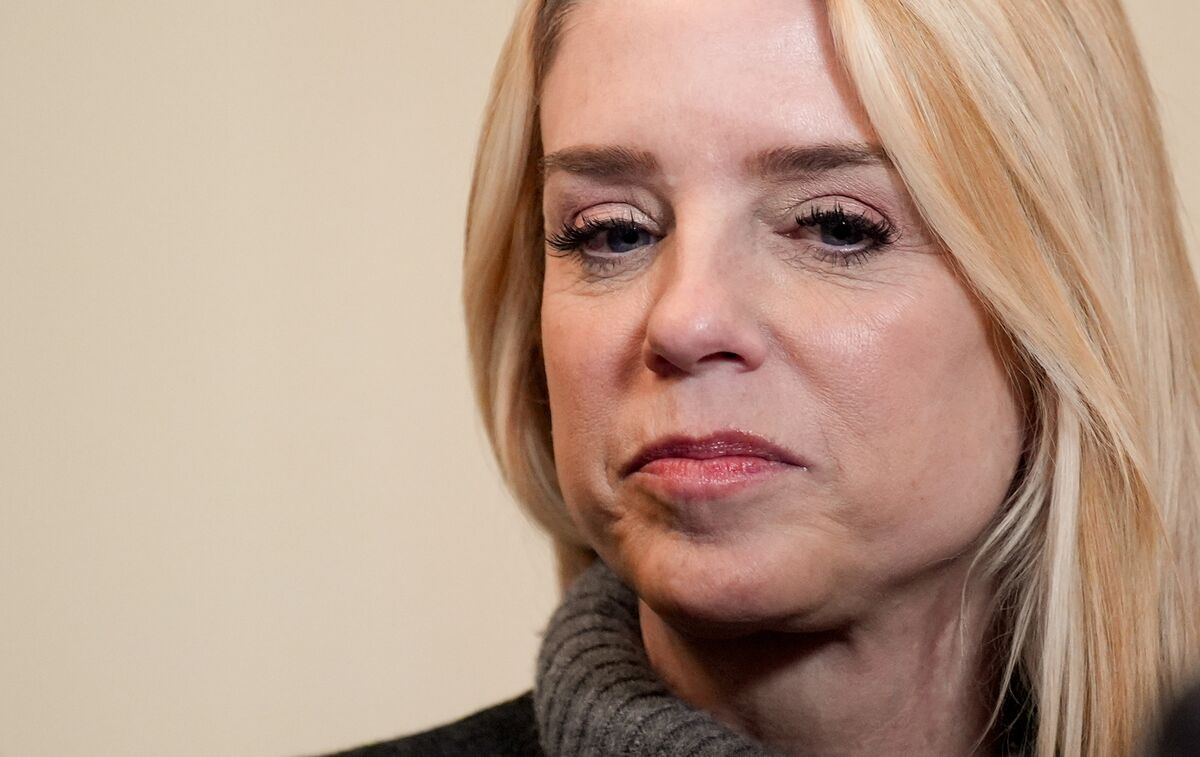
The cultural shift within the Republican party regarding congressional authority is perhaps the most significant takeaway from this episode. For years, the GOP championed the “law and order” mantle, insisting that no one is above the law and that subpoenas must be respected. However, that standard appears to be highly flexible. When a Democrat is the target, the calls for accountability are deafening. When it is a Trump loyalist like Bondi, the rules suddenly become “blurry,” and the focus shifts to process, fairness, and the supposed “persecution” of witnesses . This selective outrage undermines the very foundation of the American legal system, transforming it into a tool of partisan warfare rather than a search for justice.
Representative Ro Khanna summarized the stakes perfectly: if the legal system is to mean anything, it must apply equally to everyone. You cannot spend a decade demanding investigations into political opponents and then cry foul when your own team is asked to explain their actions under oath . The message being sent by the “MAGA machine” is clear: power must be protected at all costs, and the public’s right to know is secondary to political survival. This “mafia-style” politics—characterized by loyalty over law and protection over transparency—has become the trademark of the Trump era .
The path forward is now in the hands of the House Oversight Committee. If Bondi is allowed to ignore a subpoena without consequence, it sets a dangerous precedent for every future investigation. Congressional power would become a “joke,” and the message to every future witness would be to simply stonewall until the political winds shift. Contempt proceedings are not just about punishing one individual; they are about defending the institution of Congress itself .
As the country watches this drama unfold, the underlying question remains: what is in those Epstein files that is worth this level of defiance? The louder the GOP shouts about procedural fairness, the more the public wonders what the truth would reveal. For now, the strategy remains the same: deny, delay, and distract. But as the pressure for accountability mounts, the wall of silence around Pam Bondi and the Epstein files may finally be starting to crack. The American people deserve a system where the truth isn’t something to be managed, but something to be sought—no matter whose name is on the file.
