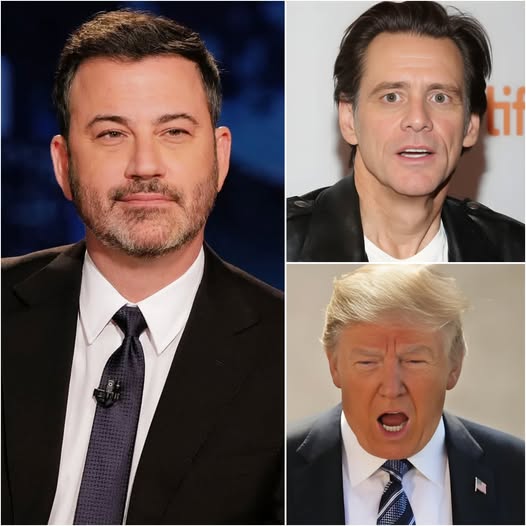
TRUMP ERUPTS AFTER JIM CARREY & KIMMEL TEAR INTO HIM LIVE—THE BACKLASH ONLY MAKES IT WORSE
The latest late-night segment featuring Jimmy Kimmel and Jim Carrey quickly escalated from comedy into a sharper cultural moment, as both figures dissected the public behavior of Donald Trump in a way that resonated far beyond the usual laughs.
The show opened with a familiar late-night tone—light, energetic, and filled with easy applause. But that atmosphere didn’t last. As Kimmel began revisiting Trump’s latest criticisms about ratings, talent, and relevance, the humor started revealing something deeper: a pattern that audiences have come to recognize.
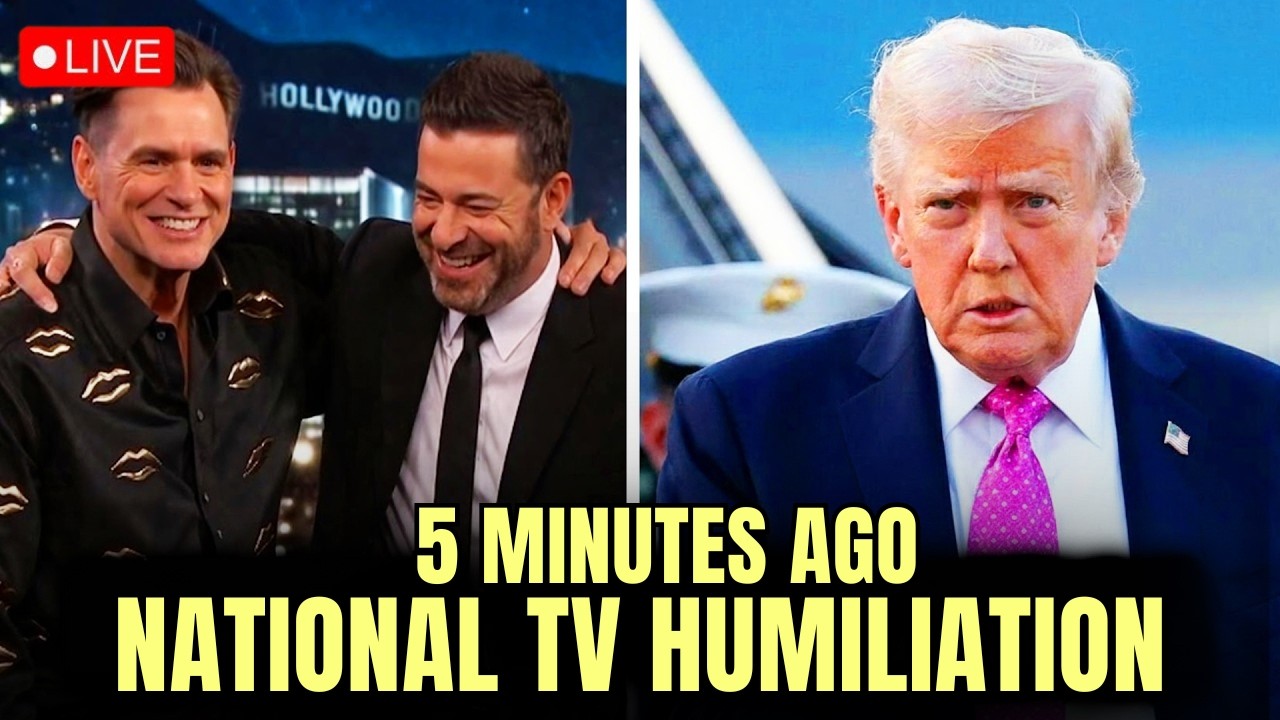
Trump’s repeated claims that Kimmel is “untalented” or “irrelevant” became the first focal point. Kimmel leaned into the contradiction, pointing out that such statements often come alongside clear evidence that Trump is closely watching and reacting. The audience responded immediately, recognizing the irony embedded in the repeated attention.
The turning point came when Kimmel delivered a concise observation: every attempt to “cancel” a comedian often has the opposite effect—it amplifies their visibility. The line landed with force because it reframed Trump’s criticism as unintentional promotion, shifting the narrative from attack to exposure.
Then Jim Carrey entered the conversation, and the tone shifted again. Unlike traditional political commentary, Carrey approached the subject as an artist rather than a pundit. His remarks moved beyond surface-level jokes, describing a broader sense of disorder and contradiction in a way that felt less comedic and more interpretive.
Carrey emphasized a key idea: the tension between visible reality and repeated denial. He suggested that when statements contradict widely available evidence, the result is not just confusion but a deeper cultural dissonance. His delivery slowed the pace of the segment, encouraging the audience to sit with the implications rather than laugh past them.

Kimmel picked up the thread, grounding Carrey’s abstract framing in concrete examples. He revisited Trump’s language around control—references to firing, silencing, and diminishing critics—and suggested that these reactions reveal frustration with spaces that cannot be easily dominated.
The segment evolved into a broader commentary on influence. Kimmel argued that comedians, journalists, and artists occupy roles that resist direct control, making them frequent targets of criticism. Each attempt to suppress or discredit them, he noted, often increases public interest instead.
Carrey extended this idea through the lens of art. He described how visual satire and exaggeration can preserve moments in a way that is difficult to erase. Once an image or narrative enters public consciousness, it becomes part of a larger cultural memory—one that cannot be easily managed or rewritten.
As the discussion deepened, the audience reaction shifted from laughter to recognition. The segment was no longer just about jokes or insults; it had become an exploration of how narratives form, spread, and resist control in modern media environments.
By the end, the focus returned to Trump’s response. His reactions—strong language, dismissals, and renewed criticism—fit the very pattern being described. The more forcefully he pushed back, the more attention the segment received, reinforcing the cycle that had been laid out from the start.
What began as a late-night comedy segment ultimately became something more layered: a reflection on power, perception, and the unintended consequences of public reaction.
